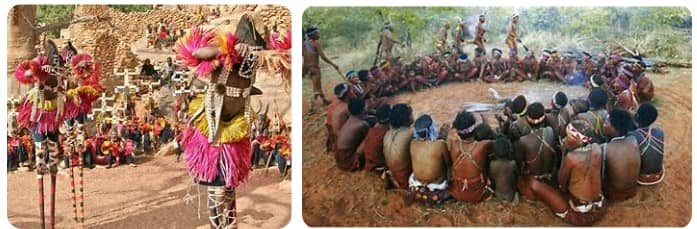
Ceremonies and rituals hold significant importance in Botswana's cultural fabric, marking various stages of life, honoring ancestors, and celebrating community ties.
These ceremonies and rituals play a vital role in preserving Botswana's cultural heritage, fostering community cohesion, and strengthening social bonds across generations. While modernization and globalization have influenced some aspects of traditional practices, ceremonies and rituals continue to be cherished and practiced as vital expressions of identity, faith, and cultural pride in Botswana.
Here are some prominent ceremonies and rituals in Botswana:
1. Botswana Ethnic Diversity
Ethnic Diversity: Botswana is inhabited by various ethnic groups, with the Tswana people being the largest ethnic group, accounting for a majority of the population. Other ethnic groups include the Kalanga, Basarwa (San), Herero, and Kgalagadi. Each group has its language, traditions, and cultural identity.
2. Botswana Languages
Language: Learning a few words or phrases in Setswana, the national language of Botswana, can go a long way in showing respect and building rapport with locals. Simple greetings and expressions of gratitude are appreciated by the people you encounter. Language
3. Botswana Traditional Music and Dance
Traditional Music and Dance: Music and dance are integral parts of Botswana's cultural heritage, with traditional music and dance forms passed down through generations. Drumming, chanting, and vocal harmonies are common features of traditional music, often accompanied by dance performances that celebrate rituals, ceremonies, and social gatherings.
4. Botswana Art and Crafts:
Art and Crafts:: Botswana has a vibrant arts and crafts scene, with artisans producing a wide range of handmade products such as baskets, pottery, woodcarvings, beadwork, and textiles. These traditional crafts reflect Botswana's cultural heritage, wildlife, and natural landscapes and are often sold in local markets and craft villages.
5. Botswana Dress Code
Dress Code While Botswana is relatively tolerant of different clothing styles, it's essential to dress modestly, especially in rural areas and when visiting religious sites or cultural events. Avoid wearing revealing clothing or attire with offensive slogans or imagery. see and learn
6. Botswana Traditional Attire
Traditional attire: Traditional clothing varies among different ethnic groups in Botswana, with each group having its distinct styles and designs. Traditional attire may include colorful fabrics, beadwork, and accessories such as headwraps, beaded jewelry, and leather sandals. Traditional clothing is worn during special occasions, ceremonies, and cultural events. Traditional Attire
7. Botswana Ceremonies and Rituals
Ceremonies and Rituals: Botswana's culture is rich in ceremonies, rituals, and rites of passage that mark important milestones in people's lives. These may include initiation ceremonies, wedding rituals, funeral rites, and traditional healing ceremonies performed by spiritual leaders and elders. Language
8. Botswana Hospitality and Community Values
Hospitality and Community Values: Hospitality is highly valued in Botswana's culture, with a strong emphasis on generosity, kindness, and community spirit. Visitors are warmly welcomed and treated with respect and hospitality, reflecting the traditional Setswana values of botho (humaneness) and ubuntu (shared humanity).
9. Cultural Sensitivity in Botswana
Cultural Sensitivity: Be mindful of cultural sensitivities and avoid topics that may be considered taboo or offensive, such as politics, religion, or personal matters. When visiting rural communities or cultural sites, ask for permission before taking photographs and respect local customs and traditions.
10. Botswana Conservation and Environmental Stewardship
Conservation and Environmental Stewardship: Botswana's culture is closely intertwined with its natural environment, and there is a deep reverence for wildlife, landscapes, and ecosystems. Conservation efforts are prioritized to protect the country's biodiversity and natural resources for future generations, reflecting the cultural values of environmental stewardship and sustainability.
11. Botswana Modern Influences
Modern Influences: While Botswana's culture is rooted in tradition, it also embraces modern influences from globalization, urbanization, and technological advancements. Urban centers such as Gaborone and Francistown are hubs of contemporary culture, with modern art, music, fashion, and cuisine blending with traditional elements. Modern Influences
12. Botswana National Identity and Pride
National Identity and Pride: Botswana takes pride in its democratic values, political stability, and economic prosperity, which have contributed to a strong sense of national identity and unity among its people. Botswana's culture celebrates its achievements, resilience, and aspirations for a prosperous future.

 For the most recent updates on travel entry requirements for Africa or any specific country within Africa, please refer to the latest information.












 t
t
 f
f
 I
I