Africa Tour Visa

Angola National Parks & Wildlife

Quiçama National Park

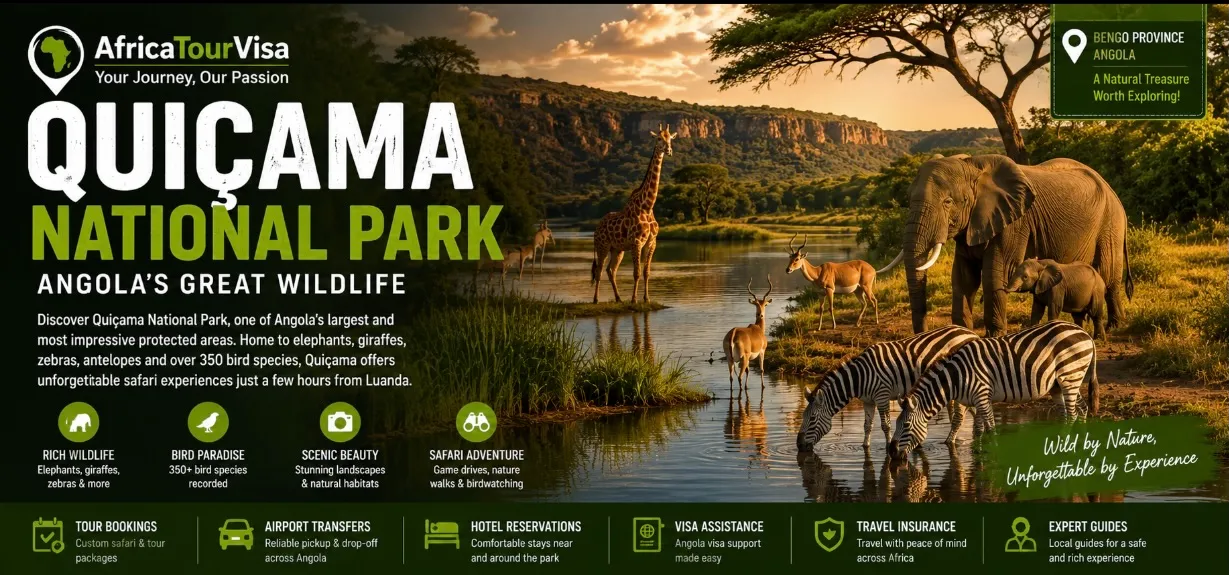
Quiçama National Park, also known as Kissama or Quissama National Park, is one of Angola’s most important wildlife destinations. Located south of Luanda along the Atlantic coast, the park is known for savannah landscapes, river habitats, baobabs, elephants, giraffes, zebras and one of Angola’s most significant conservation recovery stories.

Kissama safari Wildlife near Luanda Cuanza River scenery
Quiçama National Park in Angola with savannah, wildlife and river landscapes

Overview

About Quiçama National Park

Quiçama National Park lies in northwestern Angola, approximately 70 to 75 kilometres south of Luanda. The park stretches between the Cuanza River in the north, the Longa River in the south and the Atlantic Ocean to the west. It covers roughly 9,600 to 12,000 square kilometres, making it one of Angola’s largest and best-known protected areas.

Originally created as a game reserve in 1938, Quiçama was declared a national park in 1957. Today, it is one of the easiest national parks to reach from Luanda and is a popular destination for wildlife safaris, birdwatching, nature photography and Cuanza River excursions.

Travel guidance

Planning Your Visit from Luanda

Quiçama is often visited as a day trip or short nature escape from Luanda, but travelers should still plan carefully. Road conditions, entrance arrangements, guide availability and local services can vary, especially outside main visitor areas.

A 4x4 vehicle and local guide are recommended for safaris, wildlife routes and river excursions. International visitors should also check Angola visa and entry requirements before traveling, including passport validity, visa eligibility and any current arrival documentation rules.

Quick facts

Essential Park Details

  • Official name: Quiçama National Park
  • Also known as: Kissama, Quissama, Kisama or Quicama National Park
  • Country: Angola
  • Nearest city: Luanda
  • Distance from Luanda: About 70–75 km south
  • Established: Game reserve in 1938; national park in 1957
  • Approximate area: 9,600–12,000 km²
  • Main rivers: Cuanza River and Longa River
  • Coastline: Atlantic Ocean, approximately 120 km

Wildlife and nature information

Wildlife in Quiçama National Park

Quiçama is one of the best places near Luanda to experience Angola’s wildlife, with open landscapes, river habitats and bird-rich wetlands.

Common Wildlife Highlights

Visitors may see elephants, giraffes, zebras, wildebeest, antelopes, buffalo, monkeys, crocodiles and a wide variety of birds. Wildlife sightings vary by season and route, but guided safaris offer the best chance of seeing animals in the park’s open landscapes.

  • African elephants
  • Giraffes
  • Zebras
  • Wildebeest
  • Buffalo
  • Antelope species
  • Crocodiles and river wildlife
  • Wetland and savannah birds

Landscapes and Ecosystems

The park protects a diverse mix of ecosystems, including open savannah, baobab woodland, dense thickets, wetlands, floodplains, mangroves, riverine forest, estuaries and Atlantic coastal dunes. This variety of habitats makes Quiçama important for biodiversity and gives visitors a more varied experience than a typical savannah-only safari.

River and Coastal Habitats

The Cuanza and Longa river systems shape the park’s wildlife corridors and wetland areas, while the Atlantic coastline adds dunes, estuaries and mangrove habitats. These environments support birds, reptiles and plant communities that make Quiçama more than a classic plains safari destination.

Conservation

Operation Noah’s Ark

Quiçama National Park is closely associated with Operation Noah’s Ark, a major wildlife reintroduction initiative launched in 2001 after Angola’s civil-war years severely reduced animal populations. The project relocated wildlife from Botswana and South Africa, including elephants, giraffes and other large mammals, to help restore the park’s ecosystem.

Protected landscape

UNESCO Biosphere Reserve Recognition

Quiçama has gained renewed international importance through its recognition as part of UNESCO’s World Network of Biosphere Reserves. The designation highlights the wider Quiçama landscape as an area for biodiversity conservation, research, sustainable tourism, community development and Angola’s blue economy vision.

Things to see and do

Top Experiences in Quiçama National Park

Visitors come to Quiçama for safari drives, wildlife photography, river scenery, birdwatching and accessible nature travel from Luanda.

Take a Guided Wildlife Safari

A guided safari is the best way to explore the park’s open landscapes and improve the chance of seeing large mammals. Local guides can help with routes, animal tracking, safety and interpretation of the park’s recovery story.

Photograph Baobabs and Savannah Wildlife

Quiçama’s baobab trees, plains, river views and wildlife create strong photography opportunities. Early morning light is especially useful for landscape images and animal sightings.

Explore Cuanza River Scenery

The Cuanza River area adds water, floodplain and riverine scenery to the visit. Where available, boat trips can complement a road safari and offer a different perspective on the park’s habitats.

Go Birdwatching in Wetland Areas

Birdwatchers should focus on river, wetland and coastal habitats, where the mix of water, woodland and open country can support a varied range of species throughout the year.

Visit as a Day Trip from Luanda

Quiçama is one of the most practical wildlife destinations for visitors based in Luanda. A day trip is possible with an early start, arranged transport and realistic expectations about travel time.

Combine with Nearby Scenic Stops

Some travelers combine the park with nearby coastal or landscape viewpoints, including areas such as Miradouro da Lua, depending on route, timing and local travel arrangements.

Best time to visit

Dry Season Safari Conditions

The dry season, generally from May to October, is the best time for wildlife viewing in Quiçama National Park. During this period, vegetation is thinner and animals are easier to spot. Tracks may also be more manageable than after heavy rain.

Green season

Rainy Season Birdwatching and Scenery

The rainy season, from November to April, brings greener scenery and excellent birdwatching opportunities, although some roads may be more challenging. Visitors traveling during this period should check access conditions before departure.

How to get there

Getting to Quiçama National Park from Luanda

Quiçama National Park is usually reached by road from Luanda. Travel time depends on traffic, road conditions and the chosen entrance or lodge area. A 4x4 vehicle and local guide are recommended, especially for visitors planning a safari or river excursion.

Travelers should arrange transport in advance and confirm local conditions before leaving the city. If visiting during the rainy season, allow extra time and verify whether roads, viewpoints or river activities are operating normally.

Travel tips

Practical Advice for Visiting Quiçama

Good preparation will make the park easier, safer and more rewarding, especially for first-time visitors to Angola.

Start Early from Luanda

Leave early if visiting as a day trip. Morning departures give more time for road travel, park entry, wildlife viewing and scenic stops before returning to the city.

Book Local Safari Support

An organised safari or local guide can improve wildlife viewing and help with navigation, current route conditions and practical park arrangements.

Pack for Heat and Dust

Bring water, sunscreen, insect repellent, binoculars, a camera, breathable clothing and protection for electronics or camera gear during dusty conditions.

Carry Cash for Local Costs

Keep cash available for park fees, guide services, local stops or small purchases, as card payment may not always be available in rural areas.

Check Access During Rainy Months

Rain can affect roads and safari routes. Confirm conditions before traveling between November and April, especially if planning a self-drive or river excursion.

Confirm Entry Requirements Before Travel

Before visiting Angola, check current visa and entry requirements for your nationality. Do not rely on outdated travel information when planning flights, lodging or safari arrangements.

Why visit

Why Visit Quiçama National Park?

Quiçama National Park is ideal for travellers who want an accessible Angola safari close to Luanda. Its combination of wildlife, baobab savannah, river scenery, Atlantic coastal habitats and conservation history makes it one of the country’s most rewarding nature destinations.

The park offers more than animal viewing. It introduces visitors to Angola’s protected landscapes, post-conflict conservation recovery and the ecological variety of the country’s coast, rivers and savannahs.

FAQ

Quiçama National Park Travel Questions

Helpful answers for travelers planning a Kissama safari or nature trip from Luanda.

Where is Quiçama National Park located?

Quiçama National Park is located south of Luanda in northwestern Angola, between the Cuanza River, the Longa River and the Atlantic Ocean.

Is Quiçama the same as Kissama?

Yes. Quiçama, Kissama, Quissama, Kisama and Quicama are common names or spellings used for the same Angolan national park.

Can I visit Quiçama as a day trip?

Yes. The park can be visited as a day trip from Luanda, but travelers should start early and arrange reliable transport, ideally with a local guide or organised safari.

What animals live in Quiçama National Park?

Wildlife may include elephants, giraffes, zebras, wildebeest, antelopes, buffalo, monkeys, crocodiles and many birds. Sightings are not guaranteed and depend on season and route.

When should I visit for wildlife viewing?

The dry season from May to October is usually best for wildlife viewing because vegetation is thinner and animals may be easier to spot in open areas.

Do I need an Angola visa to visit?

Visa needs depend on nationality and current entry rules. Travelers should check Angola visa and entry requirements before booking, flying or visiting the park.