Southern Angola road tripsBicuar National Park is one of southern Angola’s most substantial protected landscapes, covering roughly 7,900 km² in Huíla Province. Official INBAC material places it about 165 km from Lubango and describes a mosaic of dry forest, wooded savanna, shrubland, open grassland and seasonal wet areas near the Cunene River.
Best fit: Southern Angola road trips.
Remote nature expeditionsCameia National Park is built around water. Official INBAC reporting places the park roughly 125 km from Luena and describes about 14,450 km² of periodically flooded plains—an eastern Angolan landscape where seasonal water can shape wildlife movement, road access and the entire character of a visit.
Best fit: Remote nature expeditions.
Desert expeditionsIona National Park is Angola’s great desert wilderness. INBAC places the 15,150 km² park in the far southwest between the Atlantic Ocean and the Cunene and Curoca river systems, about 200 km from Namibe. Dunes, gravel plains, mountains and fog-influenced coastal habitats make the landscape the main event long before wildlife enters the frame.
Best fit: Desert expeditions.
Specialist expeditionsLuengue-Luiana National Park is not a conventional drive-in safari stop. At roughly 45,816 km², according to INBAC, it forms an immense protected landscape in southeastern Angola and connects to the wider Kavango Zambezi Transfrontier Conservation Area. The scale alone changes how a traveler should think about access, safety and time.
Best fit: Specialist expeditions.
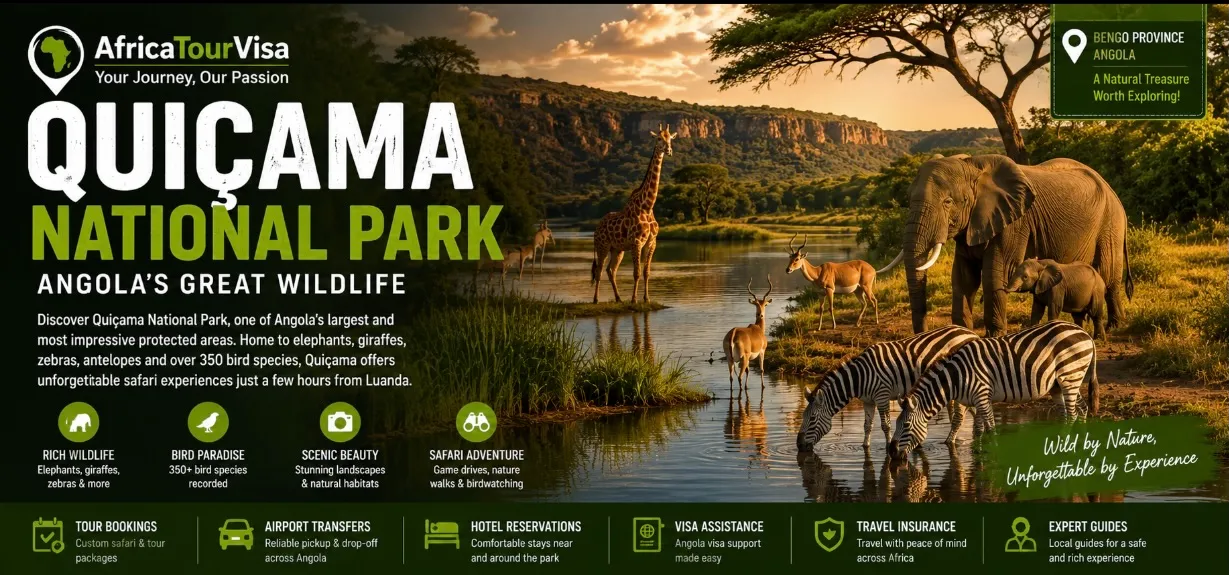
Luanda-based wildlife tripsQuiçama National Park—also widely written as Kissama or Quissama—is Angola’s most practical major wildlife park for many travelers staying in Luanda. INBAC places the park about 71 km from the capital and describes roughly 9,960 km² between the Kwanza River, Longa River and Atlantic coastline.
Best fit: Luanda-based wildlife trips.