
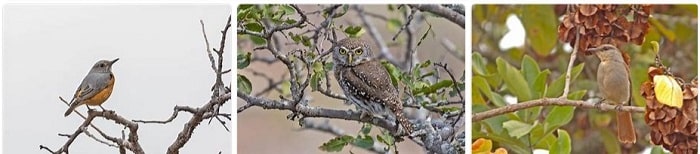
Birdwatching in Angola: what to expect
Angola’s birding rewards preparation: distances can be long, habitats change quickly by region, and the best sightings often come with local knowledge. The payoff is big—unique species, beautiful landscapes, and low crowd levels compared with more established birding destinations.
1) Notable bird species
Angola hosts hundreds of species across its ecosystems. Birders often target endemic or near-endemic birds and localized specials in the highlands and escarpment forests. Build a target list before you travel and match it to habitats (montane forest, miombo woodland, wetlands, arid zones).
2) Best birdwatching locations
Here are proven regions and parks to anchor a birding itinerary:
- Kissama National Park (near Luanda): wetlands, grasslands and woodland—good variety and easier logistics.
- Bicuar National Park (south): woodland/savannah birding with strong regional diversity.
- Mount Moco (highlands): best known for highland species; demanding but rewarding hiking birding.
- Iona National Park (far south / coastal-desert): arid and coastal habitats with desert-adapted birds.
3) Birdwatching etiquette
- Keep distance—use binoculars/spotting scope rather than approaching nests or roosts.
- Avoid excessive playback (especially in sensitive habitats or for rare species).
- Stay on established paths where possible and respect local communities and private land.
4) Equipment & preparation
- Binoculars: 8× or 10× are standard for varied habitats.
- Field guide / app: download offline packs; signal may be limited in remote areas.
- Clothing: lightweight layers; muted colors; sun protection; insect repellent.
- Logistics: carry water, basic meds, and backup power (power bank) for long days.
5) Timing & seasons
Many travelers prefer the dry season (roughly May–October) for easier access, reduced vegetation, and better visibility. Some migrants are seasonal—so confirm your target species’ timing and pick the region that best matches your list.
6) Add-on experiences
Angola can combine birding with other activities. For example: sport fishing on suitable rivers/coastal areas, or mixing birding days with cultural and city stops.
How to visit Angola
Plan entry requirements early: How to visit Angola and apply for Angola visa online.