
North Africa
Mediterranean cities, Sahara landscapes, mountains and Red Sea coasts require season-specific routes.
Independent Africa travel research
Tourism across Africa spans cities, living heritage, islands, mountains, protected areas, festivals, business travel and family journeys. Start with the experience and place; add visas and commercial services only when the route is clear.
Start with meaning
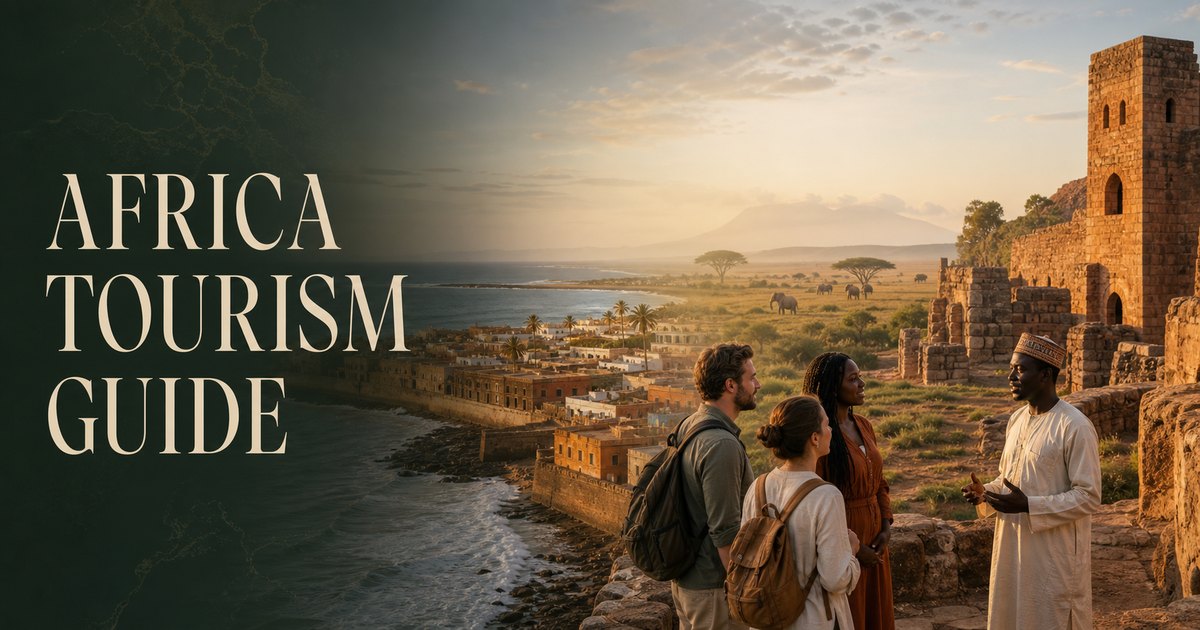
Tourism is temporary travel outside the usual environment for leisure, business, study, faith, health, family or other purposes. For the traveler, it is also a chain of decisions involving access, transport, hosts, money and behavior.
This publication treats tourism as a relationship with a place. It explains what an experience involves, who may benefit, what can be harmed and which details require a current authority check.
A continent, not one destination
Distances, climates, languages, infrastructure and border systems vary enormously. Regional orientation helps, but country and destination evidence must complete every plan.
Mediterranean cities, Sahara landscapes, mountains and Red Sea coasts require season-specific routes.
Atlantic culture, heritage, forests and Sahel travel reward focused corridors and realistic connections.
Rainforest and river journeys often require specialist access, permits and flexible logistics.
Savannah, highlands, historic cities and Indian Ocean routes create varied combinations.
Self-drive networks, wetlands, deserts, cities and parks support several planning styles.
Marine weather, air capacity, water and waste systems shape island travel.
Land and water
Wildlife travel is more than a sighting list. Habitat, season, guide conduct, park authority rules and local land relationships determine whether a safari or nature trip is responsible.
Coasts, reefs, forests, deserts and mountains need different safety and conservation checks. Begin with the ecosystem, then choose the activity.
Prepare for ethical wildlife encounters or use the Safari Booking research hub.
People and memory
Museums, faith sites, historic cities, music, food and creative practice are connected to living custodians. Photography, dress, interpretation and access need place-specific consent.
UNESCO status raises visibility but does not turn a protected place into an unlimited attraction. The managing authority and community boundaries still apply.
Coasts and commerce
Beach and island tourism depend on marine weather, safe operators, water use and waste systems. Cruise calls add port timing, tender access and transit documents.
Conferences, festivals and sporting events have fixed dates but variable operations. Verify the organizer, ticket, professional permissions, crowd routes and cancellation terms before paying for inflexible travel.
Who benefits
Local employment is important, but ownership, consent, wages, procurement and decision-making show whether benefits are shared. A village visit designed outside the community is not automatically community tourism.
Responsibility also includes labor, wildlife welfare, climate, accessibility and honest marketing. Ask for evidence behind every ethical claim.
A complete journey
Access begins with usable information and continues through airports, transfers, rooms, toilets, attractions, communication and emergency plans. The weakest connection can make the whole trip inaccessible.
Request measurements, recent photographs and written arrangements rather than relying on a general accessibility label.
Build the route
Documents come after route design
Visa rules depend on passport, destination, transit point and purpose. Confirm each requirement with the responsible government and check carrier documentation close to departure.
AfricaTourVisa is not a government authority. The visa checker can organize research, but official immigration instructions remain controlling.
Research library
Definitions are connected to practical planning, ethics and African examples.
Questions travelers ask
There is no universal best region. Match the route to season, interests, gateway, budget, mobility and the pace you can sustain.
Requirements depend on passport, destination, purpose and transit route. Confirm each country through its responsible authority.
Ask for evidence about licensing, ownership, labor, wildlife practice, environmental management, cancellation terms and local benefit.
Evidence and review
Prepared by
AfricaTourVisa Tourism Research Team.
Last reviewed
Next scheduled review
August 2027
Tourism policies, access conditions, prices and transport services can change. Confirm current information through the responsible authority or provider before travel. Report a correction to the editorial team.